
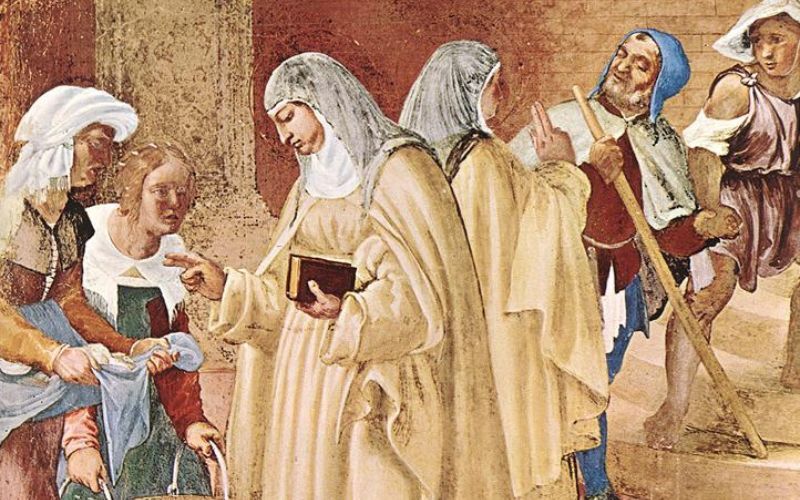
St. Brigid, a name synonymous with strength and generosity, is revered as the first native-born Irish saint. Her legacy is celebrated not only in Ireland but around the world, particularly on her feast day, February 1st, which marks the beginning of spring in the Celtic calendar.
The Generous Spirit of St. Brigid
Brigid’s early life was marked by privilege, yet she chose to share her wealth with those in need. According to legend, she would often give away her father’s possessions, including milk and butter, to the poor. This selflessness was so profound that her father attempted to marry her off to control her generosity. However, Brigid had no intention of marrying, even when faced with the prospect of marrying the King of Leinster.
Instead, she used her father’s sword, left with her while he negotiated her marriage, to help a leper, showcasing her unwavering commitment to helping others. This act of kindness ultimately led to her becoming a nun, as the king recognized her spirit was too wild to be tamed by marriage.
A Leader and Innovator
Brigid’s influence extended beyond her charitable acts; she became a leader and a symbol of learning. She founded a monastery in Kildare, which became a center for education and craftsmanship. The Gospel Book of Kildare, described as a work of angels, is believed to have originated from her community.
Her legacy also includes the miraculous ability to brew beer, with legends stating she could turn water into ale, a feat that resonated with the Celtic people of her time. This connection to the land and its traditions helped solidify her status as a beloved figure in Irish culture.
St. Brigid’s Wells and Symbolism
Holy wells named after St. Brigid are scattered across Ireland, serving as sites of pilgrimage and healing. These wells, often associated with the Celtic goddess Brigid, symbolize the fusion of pagan and Christian traditions. Visitors often tie pieces of cloth to trees near these wells, seeking blessings and healing.
Fire is another important symbol associated with St. Brigid. A perpetual flame was kept burning in her honor for over a thousand years, representing her wisdom and healing powers. This flame was relit in 1993, continuing her legacy in modern times.
Conclusion
St. Brigid’s life exemplifies the qualities of a strong Irish woman: independence, compassion, and leadership. As we celebrate her legacy, let us strive to embody her spirit of generosity and care for others. Happy St. Brigid’s Day!
For more insights into St. Brigid’s life and legacy, visit the original article here.